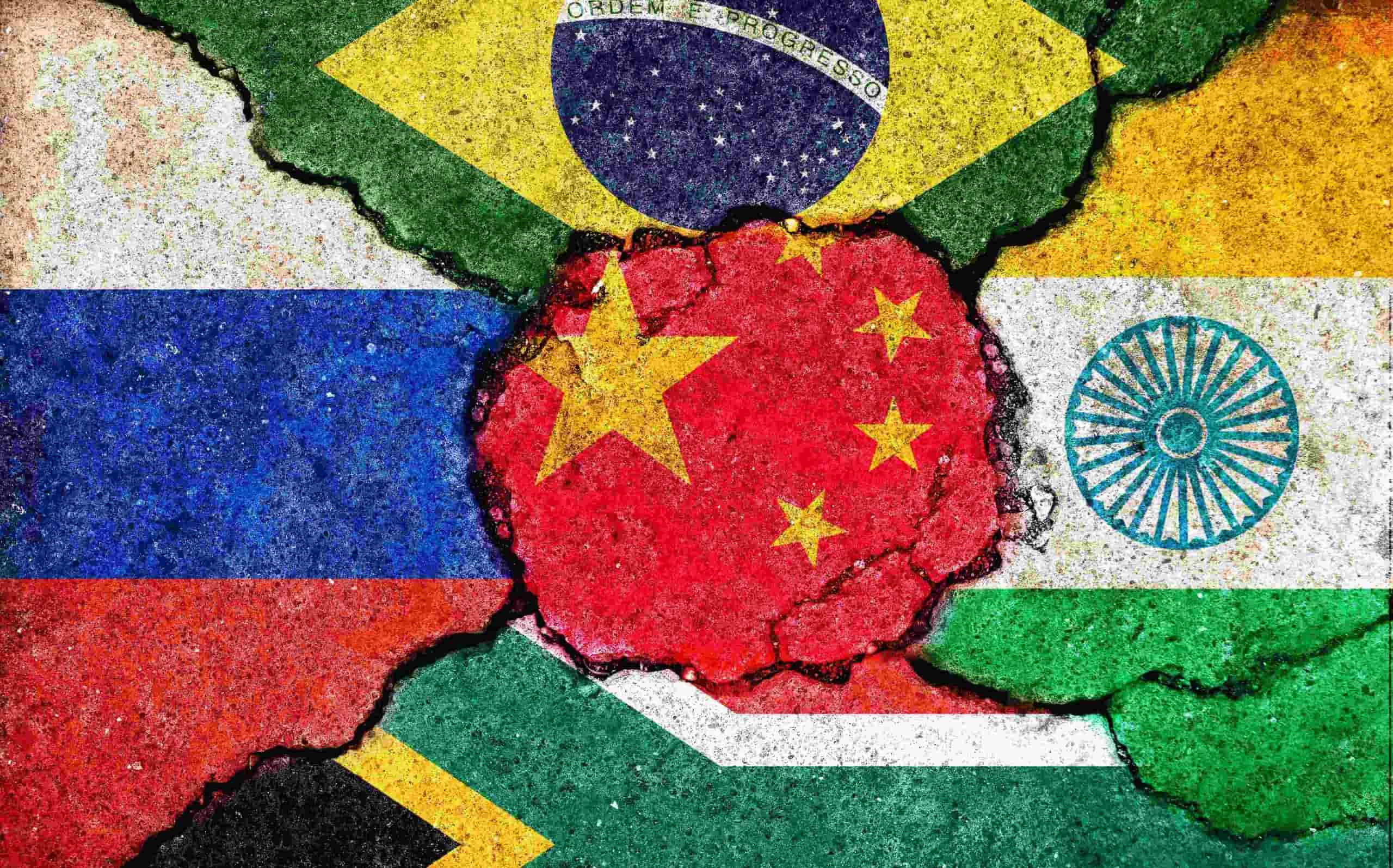
In recent years, Latin American countries have begun to lean towards the BRICS as a strategic foreign policy option. Argentina was formally invited to join the grouping in October 2023 – only to decline membership a few months later. Cuba and Bolivia became ‘partner countries’ of an enlarged BRICS+ in January 2025. At Brazil’s invitation, Mexico, Uruguay, and Colombia attended the BRICS Summit in Rio last July. What explains Latin America’s growing interest in the bloc? And why did it take Latin American countries over a decade to express their desire to be part of the BRICS?
The answer for both questions lie in how the world – and the BRICS – have changed since the beginning of the 21st century. The genesis of the BRICS grouping marks a pivotal shift in global governance, evolving from a speculative economic acronym to a significant political-diplomatic alliance. This transformation stems from the aspirations of emerging powers to reshape the international order towards a more multipolar world.
Initially coined by Goldman Sachs economist Jim O’Neill in 2001, the term BRIC – comprising Brazil, Russia, India, and China – identified these nations as promising investment destinations with anticipated superior economic performance compared to G-7 countries. Although O’Neill’s early reports projected their collective economic heft, the transition from a mere market acronym to a concrete alliance was driven by political will rather than solely financial market trends. The informal BRIC grouping began to solidify into a political entity in 2006, when the foreign ministers of Brazil, Russia, India, and China commenced annual meetings on the margins of the United Nations General Assembly.
Diplomatic coordination between emerging powers gained momentum following the 2008 global financial crisis, which underscored the need for reforms in international financial institutions. The first BRIC heads-of-state summit was hosted by Russia in Yekaterinburg in 2009, establishing annual gatherings that provided “body and content” to the nascent bloc (Garcia and Bond, 2018). South Africa’s inclusion in 2010, at China’s request, formalized the BRICS acronym in 2011 and significantly expanded its geographic representation.
Over the last couple of years, the BRICS doubled its size and launched a new category of partner countries. With 45% of the world’s population, 35% of the world’s gross domestic product (GDP) in purchasing power parity (PPP) terms, and nearly half of the world’s oil production, BRICS+ is a force to be reckoned with in world affairs, acting as a platform for the Global South (Heine, 2025). Although Latin America has yet to increase its presence in the BRICS, the changing geopolitical landscape looks promising – but not without challenges, which I will explore in the next sections.
Latin America and the formation of the BRICS
Latin America was not part of the original vision put forth by the BRICS, at least in terms of representation and membership. Those who imagined the grouping exclusively as an association of emerging, fast-growing economies, like O’Neill himself, claimed that Mexico should be considered. When the BRICS took a political turn, other investor-friendly acronyms came about – such as MINT (Mexico, Indonesia, Nigeria, Türkiye) or CIVETS (Colombia, Indonesia, Vietnam, Egypt, Türkiye, South Africa), which showcased some of Latin America’s open economies (O’Neill, 2013). In the BRICS, however, Brazil acted as both bridge and gatekeeper between the group and other Latin American countries.
Brazil, as a founding member and the sole Latin American representative in the BRICS, engages with the other members of the bloc driven by several key motivations: a pursuit of prestige and geopolitical influence, an enhanced proximity to China, and a form of «insurance» against potential diplomatic isolation from Western powers (Stuenkel et al, 2025). Under President Lula da Silva, Brazil consistently articulated a “multi-aligned strategy,” seeking to bolster ties with other emerging economies without alienating traditional partners in the United States and Europe (Berg et al, 2024). This approach positioned BRICS as a platform for pooling the interests of the Global South, thereby amplifying Brazil’s voice in critical global governance forums such as the UN, WTO, and Bretton Woods institutions. Brazil played a particularly active role in shaping the BRICS’ institutional architecture, proposing solutions and coordinating negotiations for key initiatives like the New Development Bank (NDB) and the Contingent Reserve Arrangement (CRA).

The role of Brazil
Regarding its role in the Latin American order, Brazil did not entirely go it alone but rather sought to integrate its regional leadership aspirations with its BRICS participation. Brazil is recognized as the largest and most economically powerful country in South America, with a significant regional influence extending to its neighbors. The Brazilian National Social-Economic Development Bank (BNDES), for instance, has historically directed most of its disbursed funds to Latin America. At the 2014 Fortaleza Summit, the BRICS heads of state met with leaders from the Union of South American Nations (UNASUR), thereby introducing a regional dimension to the bloc’s activities.
If it is true that Brazil has sought to project Latin America’s interests within the BRICS, it is also true that this process has faced several challenges, thanks to the asymmetries between Brazil and its neighbors. While smaller South America countries, like Bolivia, Paraguay, and Peru, resent Brazil’s regional role and their dependence on Brazilian government and multinationals, middle-sized challengers, like Argentina, Venezuela, and Colombia, reject Brazil’s self-promoted role as the voice of the region in multilateral arrangements (Malamud, 2011). Moreover, China’s and Russia’s growing influence in Latin America often came at the expense of Brazil’s regional position and reduced the incentives, on Brazil’s side, to vouch for new Latin American members in the BRICS.
BRICS evolving interests in Latin America
The period between 2013 and 2019 witnessed a profound transformation in global geopolitics, significantly shaped by the ascent of China under President Xi Jinping. This era redefined the internal dynamics of the BRICS grouping, often in stark contrast to the economic stagnation experienced by other key BRICS members like Brazil and South Africa. China’s efforts steered the BRICS from a primary focus on economic and trade cooperation towards a broader framework encompassing political and security issues, aligning with Beijing’s overarching strategic priorities (Zhao, 2025).
China’s expanding economy naturally led to a growing interest in Latin America. By 2024, trade grew to a record $518 billion. In 20 years, Chinese development banks loaned more than $120 billion to Latin America and the Caribbean, often in exchange for oil and used to fund energy and infrastructure projects – the main destinations being Venezuela, Brazil, Ecuador, and Argentina.
Moreover, China currently ranks as South America’s top trading partner and the second largest for Latin America, after the United States (Roy, 2025). This trade relationship, however, often reflected a “North-South” dynamic, with nearly three-quarters of Latin American exports to China comprising primary products. While China exported manufactured goods, Latin American countries primarily supplied raw materials and agricultural commodities (Garcia and Bond, 2018).
Under increasing Chinese intra-bloc protagonism, the creation of the New Development Bank at the 2014 Fortaleza Summit marked a pivotal moment in the institutionalization of the BRICS and its ambition to reshape global financial governance. The NDB’s structure, which explicitly allows for non-BRICS countries to join, presents an alternative source of development financing for Latin American nations. A key appeal is the promise of financing without the political conditionalities often attached to loans from Western-dominated institutions like the World Bank and IMF, a factor highly valued by developing countries (Garcia and Bond, 2018).
Concurrently, the Contingent Reserve Arrangement (CRA), also established at Fortaleza, serves as a financial safety net designed to help BRICS countries forestall short-term liquidity pressures and provide mutual support. With an initial size of US$100 billion, the CRA aims to strengthen the global financial safety net and complement existing international arrangements. For Latin American countries, particularly those facing international sanctions or seeking to reduce their dependence on the US dollar, the CRA and other BRICS initiatives like the “BRICS Bridge” alternative payments system and the promotion of local currency trade offer attractive mechanisms to circumvent Western financial systems (Klomegah, 2024).
The pandemic brought new opportunities
The Covid-19 pandemic significantly changed the landscape of international cooperation, which paved new roads for the relationship between Latin America and the BRICS. Western “vaccine nationalism” and lack of cooperation with the Global South gave China, India, and Russia the opportunity to strengthen ties with all regions of the world, including Latin America, through vaccine diplomacy, alternative financing, and calls for global health cooperation (Heine, 2025). Despite falling short of providing a sound collective response to Covid-19, the BRICS group has been unequivocal on the need for health equity, technology transfer, joint research and surveillance, and access to medicines and vaccines (Moore, 2022). For Latin American nations, the pandemic, particularly under a perceived confrontational US administration like Trump’s, heightened the appeal of BRICS as an alternative to traditional Western partners.
What are Latin American countries looking for in BRICS membership?
The recent expansion of the BRICS grouping, formalized with the addition of Egypt, Ethiopia, Iran, and the United Arab Emirates in 2024, and Indonesia in 2025, underscores the triumph of geopolitical motivations in shaping the bloc. An enlarged BRICS+ is explicitly designed to shift the global balance of power away from American unipolarity towards a multipolar, non-Western international order, with the ambitions of individual member states driving its trajectory. This expansion has also seen increased interest from several Latin American nations, driven by distinct geopolitical and economic motivations.
— Venezuela sees BRICS membership as a crucial platform to counterbalance US influence and mitigate the impact of international sanctions, which have restricted its access to financing and global markets. Nicolás Maduro’s regime views BRICS as a means to secure NDB funding, diversify economic relations, and conduct transactions in currencies other than the US dollar, thereby weakening the US-led unipolar order. Venezuela has already established political, financial, military, and energy partnerships with BRICS founders China and Russia (Holtzmann et al, 2024; Mijares, 2025).
— Nicaragua has expressed strong interest in joining the BRICS. President Daniel Ortega views the grouping as a platform for powerful and developing countries to create a multipolar world and address poverty and hunger. Nicaragua’s bid for membership is also in line with its desire to position itself as “Russia’s regional platform” and to strengthen ties with China (Berg et al, 2024; Holtzmann et al, 2024).
— Bolivia, with its large lithium reserves, seeks BRICS membership as an opportunity for technological and economic development, aiming to move away from US dollar dependence and attract investments in its mining sector, particularly from Russian and Chinese companies. Bolivia has actively engaged in discussions to secure NDB financing and diversify trade away from the dollar (Holtzmann et al, 2024).
— Cuba, a long-standing Cold War ally of Russia, sees BRICS as an economic lifeline for its struggling economy, deepening ties with Russia, China, and Iran to circumvent US sanctions and the embargo. Russia, in particular, has been actively restructuring Cuba’s debt and engaging in economic agreements (Berg et al, 2024).
— Colombia, in contrast, approaches BRICS with greater caution. While President Gustavo Petro’s administration is interested in diversifying international partnerships and attracting new investments, it remains careful not to jeopardize its long-standing ties with the United States, its top security ally and economic partner. For Bogotá, potential collaboration with BRICS is a way to expand strategic options without committing to a full realignment (Mijares, 2025).
— Argentina, under President Javier Milei, notably withdrew its application for BRICS membership, citing ideological differences and a foreign policy objective of reducing financial and economic dependence on China and not cooperating with Russia. This highlights the ideological cleavages and varying degrees of alignment with Western values within Latin America that influence engagement with BRICS (Bingyun, 2024).
The expansion of BRICS has, however, created a “bind” for democratic founding members like Brazil and India. It has become harder to portray BRICS as a non-confrontational, non-aligned entity. The shift in the balance of power, with autocracies now outnumbering democracies within BRICS+, has raised concerns that the bloc is becoming more explicitly anti-Western and Beijing-centric. This democratic deficit may lead countries like Brazil to lean out of the BRICS, reversing a decade of enthusiastic participation, due to increasing liabilities and a perceived loss of control over intra-BRICS dynamics (Berg et al, 2024).

What can the BRICS benefit from expanding to Latin America?
China, the economic hegemon within BRICS, sees the expansion as a strategic bridge to harness and shape the transformative power of non-Western countries to reform the international system. Beijing leverages selective membership invitations to solidify its leadership within the Global South, aiming for a Beijing-centric global order. This includes fostering deeper trade ties and expanding its influence globally, often as an «insurance policy» against potential Western isolation (Holtzmann et al, 2024)
Russia’s motivations for driving expansion are distinctly anti-Western, aiming to establish BRICS as a tool to diminish U.S. global dominance and develop financial and trade mechanisms outside the purview of Western sanctions. Moscow actively courts authoritarian Latin American countries like Venezuela, Cuba, and Nicaragua to expand its geopolitical influence under the guise of anti-imperialism. Russia’s active support for these nations underscores its geopolitical push for a less U.S.-centric world (Holtzmann et al, 2024).
India, operating under a policy of “multi-alignment,” uses BRICS as an alternative platform to demonstrate international leadership, promote multipolarity, and assert its role in the Global South. India supported the accession of all new members, viewing it as an adaptation of global institutions to changing times. However, India also endeavors to prevent the bloc from becoming an explicitly anti-Western clique or being entirely dominated by China, balancing its BRICS engagement with its vital relationships with Western partners (Holtzmann et al, 2024).
Brazil has maintained a more ambiguous stance on enlargement. Brasília has long opposed the expansion, fearing a dilution of its influence within the bloc and an increase in the clout of China and Russia. Brazil’s consistent aim has been to prevent BRICS from veering towards an explicitly anti-Western direction, which would thwart its long-standing ties with the United States and Europe (Illueca, 2025). While Brazil gave tacit support to Colombia’s aspiration to join, its reservations likely contributed to Venezuela’s bid for full membership falling short at the Kazan summit, as implied by Russian President Vladimir Putin’s call for Brazil and Venezuela to “work out their differences” (Berg et al, 2024).

Conclusion
The relationship between Latin America and the BRICS is fraught with internal contradictions and external pressures (Serbin, 2023). The BRICS grouping, despite its stated goals of promoting a more equitable and democratic world order, struggles with its own internal divergences, including significant differences in historical paths, economic structures, political systems, and power ambitions. The rivalry between China and India, Russia’s unique geopolitical position, and China’s growing dominance within the bloc all contribute to internal friction. Critics argue that the BRICS risk reproducing the very imperialist patterns they claim to challenge, with the benefits accruing primarily to metropolitan elites within the BRICS countries and their junior partners in the external peripheries (Garcia and Bond, 2018).
For Latin American economies, the probability of adopting a conflicting posture with their traditional Western partners in the short term remains low, as trade and investment relations with the United States and the European Union are still predominant for many (Baumann, 2025). Therefore, for BRICS to garner widespread support for a new global governance scenario, it must offer compelling incentives and build a robust support network beyond its immediate members.
The West, in turn, views the BRICS as a “wake-up call” and is urged to increase cooperation with the Global South, integrate Western-oriented BRICS countries more closely into existing global governance structures, and foster new economic partnerships and free trade agreements (Holtzmann et al, 2024). Concluding agreements such as the EU-MERCOSUR trade agreement and prioritizing relations with countries like India are seen as crucial steps to prevent a vacuum that could be filled by other powers, particularly China. The new Trump administration has embraced a different course of action, threatening all BRICS countries with massive tariffs to weaken the bloc and push Latin American countries away from Chinese influence. So far, the US strategy has backfired (Martin, 2025).
In conclusion, the relationship between Latin America and the BRICS is a dynamic and evolving process. The bloc’s expansion and its increasingly anti-Western rhetoric is an opportunity for Latin American nations who seek closer strategic and political ties with Moscow and Beijing, but it also present challenges, particularly for democracies across the region. Furthermore, whereas the BRICS offers an alternative source of financing and a platform to challenge Western hegemony, it is also criticized for potentially perpetuating existing economic inequalities and raising geopolitical liabilities. The future trajectory of this relationship will depend on the BRICS’ ability to reconcile its internal contradictions, articulate a genuinely inclusive and sustainable development agenda, and effectively build broader support among developing nations, while managing the increasingly strained ties with the United States and other Western powers.
References
Baumann, R. (2025). Latin America and the Likelihood of Influence of the BRICS. DINTE Policy Brief.
Berg, R. C., Hernandez-Roy, Ch., Bledsoe, R. & Ziemer, H. (2024, October 28). Why are Latin American Dictators Seeking Membership in BRICS+? CSIS.
Bingyun, G. (2024, January 16). Why has Argentina declined to join BRICS? Think China.
García, A., & Bond, P. (2018). Amplifying the Contradictions: the centrifugal BRICS. Socialist Register, 55.
Heine, J. (2025). Brazil, the BRICS and Active Non-Alignment. CEBRI-Revista, 13.
Holtzmann, H.-D. et al. (2024). BRICS enlargement: a strategic move or a wake-up call for the West? Policy Paper. Friedrich Naumann Foundation.
Illueca, A. (2025, July 3). Brazil’s BRICS balancing act faces a new test in Rio. China Global South Project.
Klomegah, K. (2024, August 15). Prospects for BRICS New Currency and New Payment System. Modern Diplomacy.
Malamud, A. (2011). A Leader Without Followers? The Growing Divergence Between the Regional and Global Performance of Brazilian Foreign Policy. Latin American Politics and Society, 53(3).
Martin, N. (2025, June 9). Will BRICS boom under Trump’s watch? dw.
Mijares, V. et al. (2025, March 31). Colombia and Venezuela. In S. Patrick et al., BRICS Expansion and the Future of World Order: perspectives from member states, partners, and aspirants. Carnegie Endowment for International Peace.
Moore, C. (2022). BRICS and Global Health Diplomacy in the Covid-19 Pandemic: Situating BRICS’ diplomacy within the prevailing global health governance context. Revista Brasileira de Política Internacional, 65(2).
O’Neill, J. (2013, November 12). Who You Calling a BRIC? Bloomberg.
Roy, D. (2025, June 6). China’s Growing Influence in Latin America. Council on Foreign Relations.
Serbin, A. (2023, September 18). BRICS and the Dilemmas of Latin America. Valdai Discussion Group.
Stuenkel, O. (2025, March 31). Brazil. In S. Patrick et al., BRICS Expansion and the Future of World Order: perspectives from member states, partners, and aspirants. Carnegie Endowment for International Peace.
Zhao, T. (2025, March 31). China. In S. Patrick et al., BRICS Expansion and the Future of World Order: perspectives from member states, partners, and aspirants. Carnegie Endowment for International Peace.