


The late 1990s marked the end of a phase in which nation states were weakened. This fragility manifested in two ways. First, the rise of transnational economic actors introduced internal competition that had once been regulated or contained by nation states themselves. Second, the dissolution of the Soviet Union and the end of the Cold War produced a unipolar international system, drastically narrowing the space for strategic action beyond national borders.
With the dawn of the new century, Latin America’s left-wing governments encountered a transformed scenario. This context allowed them to reassert state regulation, advancing a more closed form of capitalism coordinated with elites tied to the public sector. In certain cases, they also secured the backing of transnational corporations willing to operate under the new rules.
At the same time, the gradual shift back toward multipolarity opened external strategic opportunities. The erosion of international institutions and norms that had constrained absolute national sovereignty reinforced the internal power of states. Within this context, China, Russia, and Iran appeared as potential partners, offering cooperation without requiring democratic reforms or human rights commitments.
Latin American states consolidated internal strength and gained greater room for maneuver within a contested international system. This empowerment was fueled primarily by the boom in exportable commodities.
Consequently, left-leaning governments and the national elites aligned with them reinforced their political power. This article examines how the new Latin American left—and its associated elites—responded to the repercussions of the Soviet collapse. What might have been a profound crisis was instead reframed as an opportunity to adapt, consolidate, and expand their influence as never before.
Those Who Rule (and Influence)
Before proceeding, it is important to clarify what is meant by elites. For this study, we adopt Turchin’s definition (2023, p. 17), which provides sufficient flexibility to apply to the Latin American context. Elites are understood as individuals who hold greater social power and are therefore capable of influencing others in multiple ways.
The capacity to influence has become a central and novel characteristic of elites. This challenges the most anachronistic perspectives, which reduce them to the oligarchies of the 19th century (García Delgado et al., 2018). The profound social and technological transformations of recent decades make such views no longer sustainable and demand their revision (Merkel, 1994).
In this context, elites are often portrayed as oligarchies, permanently obstructing popular triumph. They are attributed with a homogeneous and systematic intent to block transformative processes promoted by social majorities, themselves depicted as unified and inherently benevolent (Cannon, 2006). Yet reality is invariably more complex than such a narrative suggests.
The Old and New Latin American Elites
This research does not seek to trace in detail the historical evolution of Latin American elites or to offer a comprehensive analysis of each national case. Such an endeavor would be monumental.
It is worth emphasizing, first, that a defining characteristic of elites has been their heterogeneity. Rather than forming monolithic blocs, they have consistently been fragmented, with disputes and confrontations arising from ideological divisions, sectoral interests, and shifting power dynamics.
Conceiving elites as sectors endowed with the capacity to influence reveals a dynamic and active landscape in which diverse groups compete for power. Even among the defeated or those excluded from formal authority, elites can be identified. In this sense, the national elite emerges as a body marked by constant tension and conflict.
A second recurring feature of Latin American elites has been the persistence of intense nationalism, with Latin Americanism operating as its supranational expression.
This nationalism frequently acted as a point of convergence between left- and right-wing sectors of the elites, united in their rejection of values and practices associated with the United States. This dynamic stands in contrast to Europe and the United States, where the division between left and right has historically been more rigid and exclusive.
This phenomenon is neither recent nor confined to the second half of the 20th century. Since 1898, following the U.S. victory in the war against Spain, a rejection of this emerging global power has taken root in Latin America. The United States was perceived as embodying individualism and materialism, values that clashed with the region’s deeply rooted traditions.
Unlike in the 19th century, when many elites regarded the United States as a model, other sectors—intellectuals, politicians, and academics—embraced a romantic vision of Hispanic culture. At times this was tied to fundamentalist Catholicism, and in other cases to diverse strands of an emerging Latin Americanist ideology.
Latin American Nationalism
As Quijada (1998) demonstrates, the idea of Latin America emerged as a construct advanced by sectors of the elite seeking both to reinforce a universalist claim and to counterbalance the growing influence of the United States in the region. Over time, this discursive terrain provided fertile ground for the rise of populist narratives of diverse orientations—civilian and military, left-wing and right-wing.
In the context of the communist threat of the 1960s and 1970s—particularly following the Cuban Revolution—Latin American elites did not automatically align with the United States. Instead, many sought to uphold nationalist profiles that preserved margins of autonomy.
Even within these same sectors, affinities developed toward projects aligned with communism. They also established contacts with countries of the so-called global south and with national liberation movements in Africa and Asia. This reality contrasts with certain academic and intellectual interpretations from the left that imagined a uniform support (Vommaro and Gené, 2018).
This diverse and conflict-ridden scenario helps explain the authoritarian responses of other elite groups, often expressed through personalistic leadership styles or, more directly, through military coups and revolutionary movements.
This summary demonstrates that Latin American elites cannot be reduced to a closed aristocracy or a purely extractive oligarchy, as suggested by Bull (2013). Rather, they constituted a heterogeneous and strongly ideological universe, defined by nationalist and confrontational traits projected toward the past, present, and future, and marked by recurrent violence.
The consequences of these disputes were not homogeneous; they unfolded differently depending on the national context in which they occurred.
[The Latin American elites] constituted a heterogeneous and strongly ideological universe, defined by nationalist and confrontational traits projected toward the past, present, and future, and marked by recurrent violence.
The Latin American Left after Real Socialism
In Latin America, the fall of the Berlin Wall did not resonate with the same intensity as in Europe. For European intellectual and political circles, it was a stunning event. For the Latin American left, however, its impact proved more limited.
This is explained by the fact that it was never fully Marxist, nor did it define itself exclusively in relation to Soviet communism. While it incorporated socialist elements, its ideological foundations were heterogeneous, blending influences from nationalism, Jesuit-inspired Catholicism, populism, and diverse national political traditions.
Therefore, the political and intellectual elites were not paralyzed by the Soviet collapse. The Latin American left proved more pluralistic and hybrid, anchored in local traditions rather than a rigid Marxist-Leninist affiliation.
This diversity, which at times hindered collective action, found a powerful facilitator in Cuba. The island provided a shared horizon of resistance against the United States and, simultaneously, offered its own model—distinct from the Soviet one—for organizing social and political struggles in the region.
This strengthened its influence and enabled it to play a central role in shaping the more left-leaning Latin American elites. Contrary to certain academic interpretations, these elites were neither socially marginalized nor homogeneous in their adherence to revolutionary ideals.
Cuba’s relationship with the Soviet Union was not one of complete subservience. The island pursued its own projects and, for that reason, aligned more closely with urban guerrillas and armed organizations than with the traditional—and often bureaucratic—communist parties.
Latin American communist parties, for their part, often played an ambiguous and even contradictory role. At times, their political strategies led them to endorse options that were difficult to justify within a revolutionary orthodoxy.
Therefore, a tradition of diversity has long characterized Latin American elites. In the 21st century, however, this tradition experienced a significant transformation with the rise of Bolivarian socialism. The project promoted a regional offensive aimed at aligning national elites under its banner, producing friction with the plural trajectories that had historically defined them.
A Turning Point in the History of Elites
One of the clearest indications that the Latin American left was able to confront the effects of socialism’s collapse is that, as early as 1990—prior even to the dissolution of the USSR—it already had a strategy to respond to the crisis.
The creation of the São Paulo Forum in 1990 marked a turning point. It convened politicians, social movements, intellectuals, cultural figures, religious leaders, and representatives of diverse leftist currents.
The aim was to establish a common program and strategies that soon extended throughout Latin America, aided by the discontent and rejection directed at the governments of the 1990s.
With Hugo Chávez’s rise to power and his alliance with Cuban communism, the movement gained clear leadership, a cohesive narrative, and vital resources from the oil boom. This dynamic was reinforced by the election of new governments in Argentina, Bolivia, Brazil, and Ecuador, which also prospered under favorable economic conditions.
During the so-called Pink Tide—the cycle of progressive and left-wing governments in Latin America beginning in the early 2000s—new political, cultural, intellectual, technocratic, and bureaucratic elites emerged.
Their formation was anchored in state resources, yet equally in a revitalized political and symbolic capital—legitimized through appeals to social redistribution, national sovereignty, and regional integration.
The Festival Against the FTAA, organized in Mar del Plata, Argentina, in November 2005 during the Fourth Summit of the Americas, represented a decisive turning point. It was both a political and cultural milestone that exposed the strategies of the emerging elites to a global audience.
The event combined Chávez’s speeches with the diverse presence of Latin American social movements, representatives of the artistic and cultural world—including Manu Chao—and popular figures from outside the political sphere, such as Diego Maradona. Emerging leaders like Evo Morales also took part, portrayed by the European and North American press in an idealized and romantic light that proved difficult to sustain in practice. Shortly thereafter, the same dynamic would be applied to Ecuador’s Rafael Correa.

A New Illiberal Program
The return to a more pronounced multipolarity, together with the economic and political ascent of the left in the 21st century, resulted in power exercised with limited constraint. As part of its strategy for expansion —and legitimization—, it incorporated agendas linked to European post-materialist values such as feminism, environmental protection, multiculturalism, and human and civil rights.
However, these ideas were stripped of their liberal foundations and reinterpreted through the lens of identity politics and authoritarianism. In this way, a politically correct narrative was constructed, aimed at marginalizing or canceling dissidents and opponents.
On a theoretical level, these transformations were systematized by thinkers such as Ernesto Laclau and Chantal Mouffe, whose work offered an ideological and academic framework for action.
A defining characteristic was their transnational action. For this reason, Grundberger (2023) aptly referred to them as the Pink Galaxy. These groups acknowledged one another across borders, organizational types, and sectors of the left.
Spaces such as the Latin American Council of Social Sciences (CLACSO), the Puebla Group, the Progressive International, a range of transnational NGOs, and the Latin American and European progressive press positioned themselves as allegedly “independent” narrators.
These actors legitimized measures intended to destabilize any government that sought to reverse or restrict Bolivarian policies. They also contributed to justifying the more authoritarian practices of allied governments and to canceling their critics.
The leadership vacuum within the European left opened space for Latin American agendas to assert themselves across the old continent. In an unprecedented development, they also exerted influence on sectors of the American elite, traditionally more cohesive during the Cold War.
Over time, the traditional flow of funding from Europe to Latin America was reversed. Intellectuals, NGOs, and political parties in Europe, along with actors in other regions, began receiving resources from Latin America—most notably Venezuela.
This process endowed the pink galaxy with a more global reach.
Elite Overproduction
The convergence of abundant resources, charismatic leadership, state-granted privileges for adherents, and a carefully constructed ideological narrative allowed these elites to consolidate control over national and supranational institutions tied to culture, education, and the defense of rights.
At the same time, it promoted the expansion of public employment to benefit its supporters and facilitated the creation of large‑scale corruption schemes—such as those involving Brazil’s Workers’ Party and Petrobras—designed to illegally finance political activity.
Depending on the country, governments allocated lucrative business deals to the armed forces, influential politicians, power brokers, their publicists, and local leaders. In doing so, they effectively cannibalized the state to reward their supporters.
Appealing to what Turchin (2023) terms the elite overproduction, governments simultaneously distributed micro-shares of power to neighborhood organizations, unions, student groups, intellectual circles, and even organized crime sectors. This was achieved through the creation of positions, the distribution of state resources, and the displacement of political adversaries—many of whom were dismissed, marginalized, or exiled.
This process led to the consolidation of a self-perceived universe of elites that expanded exponentially. Their advantages grew even amid rising poverty, reinforcing their determination to defend their status.
The renewed and consistent integration of these leftist groups into the elites enabled them to endure periods outside the national governments. They maintained resistance through the opposition, subnational administrations, academic and artistic institutions, and social movements, supported by transnational networks and even international cooperation funds.
Meanwhile, on the other side, the opposite unfolded.
Who Opposes the Pink Tide?
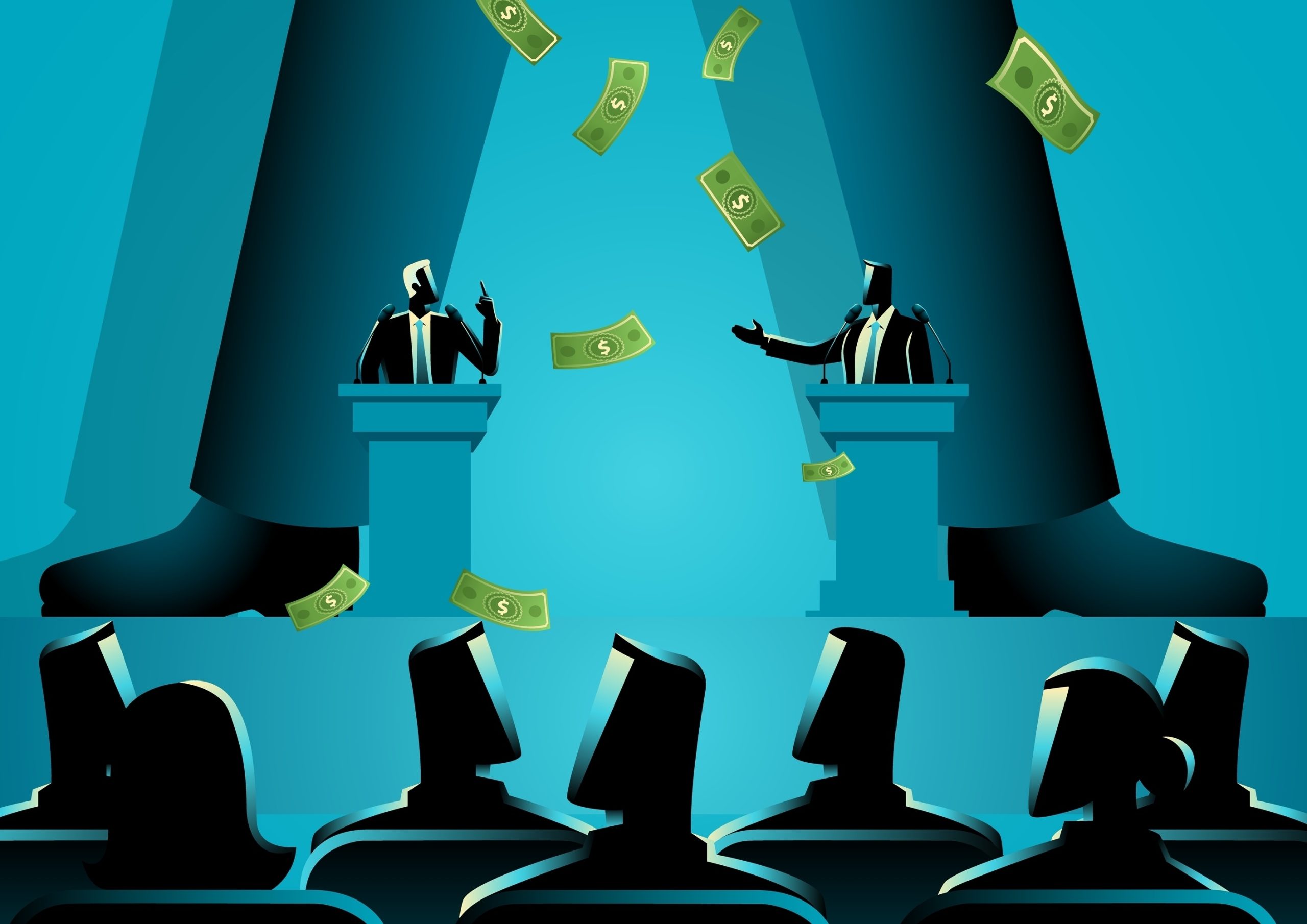
A central factor in explaining the ascent of the Pink Tide parties and their successors lies in the weakness of their adversaries. Democratic, liberal, and conservative sectors, ranging from the center to the right—failed to comprehend the nature of the challenge before them. That is why they failed to recognize that, once in control of the state, the new left-wing elites would be unlikely to exercise—or surrender—that power strictly in accordance with the rules of the democratic game.
In Venezuela, these developments gave rise to dynamics typical of a totalitarian regime. In Argentina, by contrast, it manifested in the subordination of civil society to the state. The outcome was a country that proved difficult to govern through any logic other than clientelistic patronage and corruption.
The condition in which the Movement for Socialism governments left Bolivia—and the challenge of governability for the next president—constitutes an enigma not easy to resolve. A similar situation can be observed in Honduras, Nicaragua, and in the processes currently unfolding in Colombia and Mexico.
The Battle for the Narrative
The reality is that, outside the regional left, there is no common narrative, no shared spaces or stories, and no transnational networks to connect its actors. Nor are there symbolic mechanisms or cultural references capable of consolidating a collective identity. Beyond the pink galaxy, fragmentation prevails.
Furthermore, these sectors failed to achieve electoral unity or to coordinate joint actions within fragmented congresses. In many cases, this weakness made their own governments vulnerable to the offensive of the left.
A turning point came with the social and political conflicts orchestrated against the governments of Guillermo Lasso in Ecuador (2022), Mauricio Macri in Argentina (2017), Dina Boluarte in Peru (2022–2023), Iván Duque in Colombia (2019 and 2021), and Sebastián Piñera in Chile (2019).
These events were coordinated and intended to open the doors of power to the left, a goal effectively achieved in several countries. A major triumph for the left lay in constructing and imposing, as common sense, a narrative about itself. This narrative was presented in a naive and Manichean manner, while simultaneously portraying its opposition as part of the discredited far-right.
The policies advanced by the Pink Tide not only consolidated left-wing governments in their countries of origin. They also paved the way for a second wave that elevated major leaders to power in other Latin American states, including Andrés Manuel López Obrador in Mexico, Gustavo Petro in Colombia, and Xiomara Castro in Honduras.
This new phase provided greater momentum to authoritarian dynamics. These were directed toward capturing the state, neutralizing opposition, restricting freedom of expression, and, in certain cases, pressuring the judiciary to secure policy continuity. A clear example is the trajectory of Claudia Sheinbaum, successor to López Obrador.
A distinctive feature of the present era is the rise of a new transnational entity that brings together states, guerrilla movements, and criminal cartels. This phenomenon is most clearly observed in Venezuela and Cuba, given their connections to organizations such as the Tren de Aragua and the Cartel of the Suns.
Conclusions
The multipolar order that emerged at the dawn of the 21st century facilitated the transnational action of the Latin American left, in contrast to the unipolarity of the 1990s, which had constrained it.
In a world marked by competing actors, the opportunities to pursue strategies of geopolitical ambiguity, flexible international alignments, and opposition to the global North expanded.
The combination of the influx of vast resources and the consolidation of strong governments—often achieved by dismantling or weakening institutional controls to neutralize opposition—made it possible to implement the agenda that formed the core of the regional left’s political project.
While adapting to the specificities of each nation, the left maintained a common aim: to appropriate the elite, thereby giving greater depth to its transformations and ensuring their durability.
Paradoxically, while in power, they attributed their failures to an elite that in many cases no longer existed.
Over time, an elite once heterogeneous, contradictory, and diverse—even marked by violence—was transformed into something far more homogeneous.
Leftist thought grew almost inseparable from the State, relying on its resources and privileges as the basis for legitimizing and sustaining its political projects.
Progressivism simultaneously established itself as the common sense shaping the narratives of academia and the cultural sphere.
So long as these elites remain effectively unchallenged by ideologically opposed counterparts across political, cultural, discursive, and social mobilization fronts, the 21st-century left will continue to hold power—even beyond formal government.
Bibliography
Bull, B. (2013). Elites and environmental governance in Latin America: A framework for studying a contentious issue. ENGOV Working Paper Series No. 2. University of Oslo.
Cannon, B. (2016). The right in Latin America: Elite power, hegemony and the struggle for the state. Routledge.
Gibson, E. L. (1996). Class and conservative parties: Argentina in comparative perspective. Johns Hopkins University Press.
Grundberger, S. (2024). La galaxia rosa: Cómo el Foro de São Paulo, el Grupo de Puebla y sus aliados internacionales socavan la democracia en América Latina. Konrad Adenauer Stiftung.
Marcos, J., & Mateo, J. J. (2016, June 20). Venezuela Assembly probes Podemos funding from Chávez regime. El País (English edition).
Merkel, W. (1994). Entre la modernidad y el posmaterialismo: La socialdemocracia europea a finales del siglo XX. Alianza Universidad.
Quijada, M. (1998). Sobre el origen y difusión del nombre «América Latina» (o una variación heterodoxa en torno al tema de la construcción social de la verdad). Revista de Indias, 58(214), 595-616.
Turchin, P. (2023). Final de partida: Élites, contraélites y el camino a la desintegración política. Debate.
Vommaro, G., & Gené, M. (Comps.). (2018). Las élites políticas en el Sur: Un estado de la cuestión de los estudios sobre la Argentina, Brasil y Chile. Universidad Nacional de General Sarmiento.
