Authoritarianism is making a comeback in Latin America. Increasingly, countries are transitioning toward less pluralistic forms of government. Yet, given the resilient and enduring presence of the Cuban regime, one must ask whether authoritarianism ever truly disappeared from the region. The 1970s marked a bleak chapter in Latin America, dominated by authoritarian regimes—military, sultanistic, or civilian—that imposed order from the right at the expense of repression and enforced silence. At the same time, radicalized guerrilla movements and repressive reactionaries with military backing assaulted the fragile Spanish American republics from opposite ends of the political and ideological spectrum.
This situation began to shift with the so-called third wave of democratization in the 1980s, which carried hopes of openness, pluralism, and political freedoms. Yet the process revealed clear limits: transitions unfolded mainly at the national level and failed to fully transform entrenched institutional structures, particularly those rooted at the subnational level. As the literature on authoritarian enclaves demonstrates (Garretón, 2010; Benton, 2012), in many countries the institutional legacies inherited from the authoritarian past persisted, while territories under the control of caciques or hegemonic parties continued to uphold authoritarian practices intact. In Chile, for instance, lifetime senate seats and the binomial electoral system obstructed democratic progress. In Mexico, meanwhile, states such as Veracruz and the State of Mexico remained firmly under control of the dominant party even after the national political alternation of 2000.
Even with these limitations, the region experienced what many observers described as a Latin American democratic celebration. In the first decade of the 21st century, elections multiplied, political rights expanded, and electoral democracy appeared to consolidate. Yet beneath the surface, troubling signs emerged: in Venezuela, Nicaragua, and Bolivia, democratically elected leaders began to concentrate power, weaken checks and balances, and erode the institutions that sustained democratic equilibrium.
Old Practices, New Forms
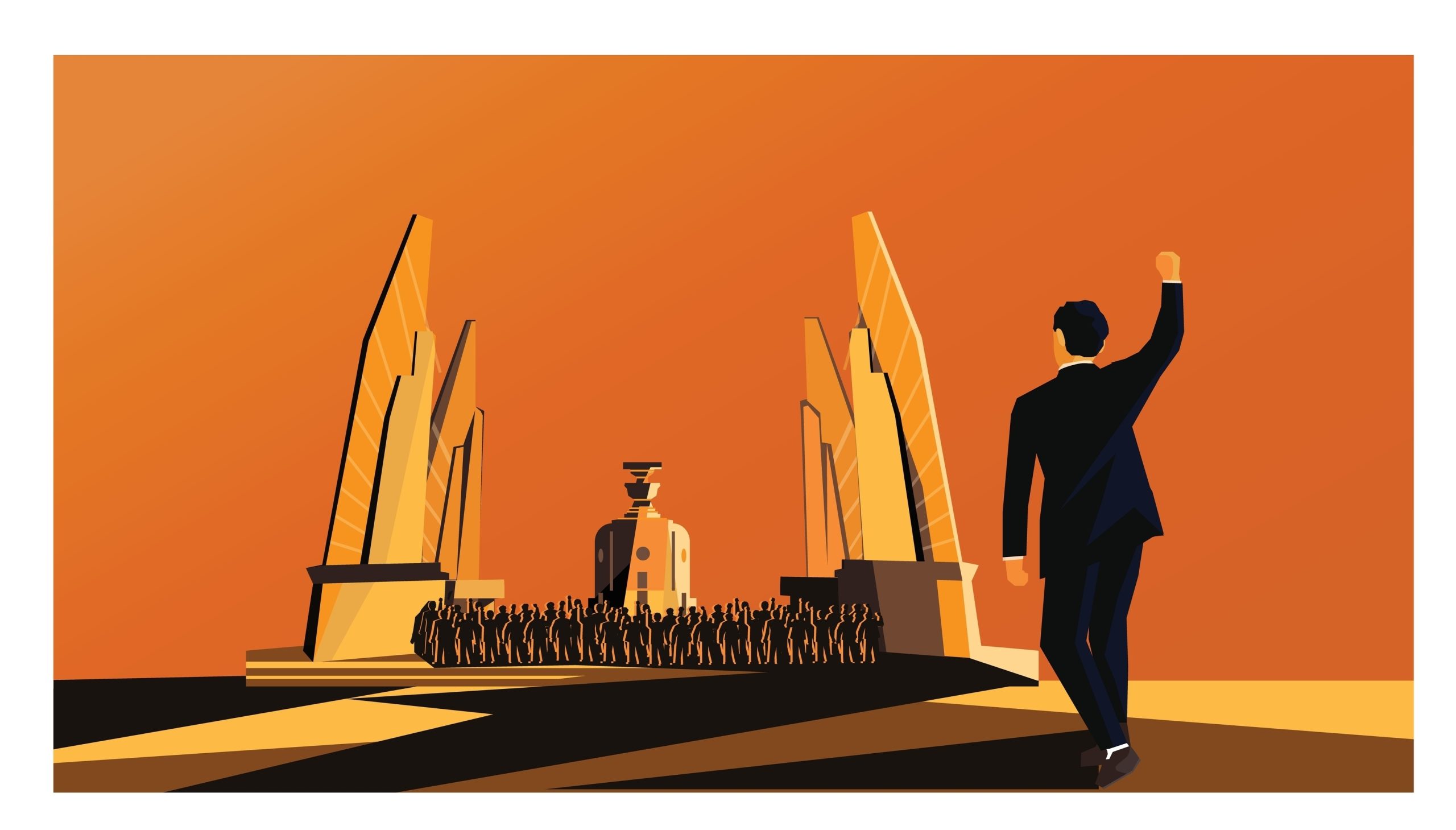
Today, Latin America is undergoing a period of tension shaped by regional and global trends toward autocratization (Wiatr, 2019; Croissant & Tomini, 2024), democratic erosion, and the resilience of certain regimes, as highlighted in the 2025 Varieties of Democracy Report (Nord et al., 2025). Citizen disillusionment, enduring inequality, and the failure of democratic governments to adequately address social demands have opened the door to the resurgence of authoritarian and populist leadership. In several countries, old authoritarian practices have been reconfigured in ways that exploit democratic rules to undermine them: manipulation of electoral systems, restrictions on press freedom, subordination of the judiciary, and the dismantling of accountability mechanisms. The cases of El Salvador, Nicaragua, and Venezuela are the most evident, though far from the only ones.
These transformations cannot be understood apart from the broader international landscape: Latin American democracy today confronts challenges that transcend national borders. The reconfiguration of the global geopolitical order—with the rise of authoritarian powers such as Russia and China, the crisis of democratic leadership in the United States, and the weakening of multilateral institutions—has eroded the framework of incentives and support that once favored democratic expansion in the 1990s. Programs designed to promote democracy have weakened, while initiatives that tolerate authoritarianism and advance illiberal agendas have become increasingly visible. In this context, Latin American democracies struggle not only with their internal legacies but also with a global environment that has grown increasingly unfavorable to democracy.
In this context, the article offers a historical overview of authoritarianism in Latin America from the 1970s to the present, demonstrating that, far from disappearing, it has continuously reshaped itself by adopting new forms and strategies. The narrative begins with the right‑wing authoritarianism that dominated Latin America in the 1970s and early 1980s, marked by military dictatorships and repressive regimes. Even with the subsequent wave of democratization, the text contends that authoritarianism never fully disappeared, surviving instead in subnational enclaves where entrenched local power structures endured. Thus, between 1980 and 2000, democratic expansion and the diversification of political regimes gave way to a period in which democratic practices coexisted with the reconfiguration of authoritarianism. In the first decade of the 21st century, democratic optimism persisted, yet it was accompanied by new forms of power concentration—particularly within left-wing governments—that began to erode the rules of the democratic regime.
Finally, between 2020 and 2025, the region has witnessed the emergence of diverse forms of authoritarianism. No longer sustained by a single model or ideology, these multiple expressions—whether from the right, the left, or more ambiguous currents—have developed in close connection with the shifting global geopolitical (dis)order. Indeed, the erosion of Western leadership, the diffusion of illiberal narratives, and the weakening of multilateral institutions have fostered an environment in which Latin American authoritarian leaders can secure support, claim legitimacy, and maneuver to subvert democratic institutions under a veneer of legality—riding what academics have termed the third wave of autocratization (Lührmann & Lindberg, 2021).
From Reactionary Dictatorships to Democratic Transitions and the New Forms of Autocratization
As various authors have noted (Mainwaring and Pérez-Liñán, 2013), the triumph of the Cuban Revolution set in motion a process of radicalization among broad sectors of the urban middle classes, intellectual circles, and left‑wing organizations. These groups identified U.S. imperialism, Latin American oligarchies, and much of the national political class and institutions as representatives of a reactionary order that had to be overthrown. In response, the armed forces—backed by the bourgeoisie, broad sectors of the middle class, and even portions of the popular classes—carried out coups d’état and engaged in transnational collaboration to repress what they perceived as a subversive threat. The establishment of the so-called national security regimes, marked by widespread repression and political violence, defined the 1970s.
From the mid‑1980s to the early 1990s, military regimes and civil wars opened the way—as a result of a combination of social struggles and political agreements—to processes of democratic transition and peace agreements. These introduced polyarchic institutions and processes, as well as human rights, as guiding principles of legitimate political action for national development.
Within the framework of the Contadora agreements in Central America, the third wave of democratization reached Latin America through the return of civilian governments in the Southern Cone. Argentina (1983), Brazil and Uruguay (1985), Paraguay (1989), and Chile (1990) raised hopes for governments founded on respect for rights and freedoms, designed to restrain leaders’ ambitions to concentrate power in a single group.
At its peak—at the beginning of the 21st century—Latin America was largely governed by electoral democracies, with scores ranging from 0.5 to 0.87 on a scale from 0 to 1. On this scale, 0 (red in Map 1) represents the absence of electoral democracy, while 1 (deep purple) indicates the full realization of its ideal. As Map 1 illustrates, only Cuba appears in red, while most Latin American countries are shaded in varying tones of purple.
MAPA
This phase of democratic recovery (1980–2000) unfolded alongside the weakening of the state under neoliberal policies, producing a paradox: civil and political citizenship expanded, while social citizenship and the welfare state stagnated or even regressed. The resulting imbalance fostered citizen disenchantment with democracy and opened the door to the rise of populist or openly authoritarian leaders.
Unfulfilled Expectations
Thus, over time, elections and newly established democratic institutions proved insufficient to meet citizens’ expectations. In several countries, this disillusionment led people to enthusiastically support authoritarian alternatives at the ballot box. At the dawn of the new century (2000–2010), Latin America experienced the coexistence of expanding democracy—symbolized by the approval of the Inter‑American Democratic Charter and the pressure exerted within the OAS against Fujimori’s authoritarian and neoliberal populism—and the rise of self‑proclaimed progressive leaders such as Hugo Chávez, Evo Morales, Rafael Correa, Lula da Silva, and Néstor and Cristina Kirchner. Yet these leaders increasingly moved toward a reconfiguration of authoritarianism through models of governments of the people.
From 2010 onward, the region experienced a pronounced shift toward autocratization, spearheaded by left-wing governments in Bolivia, Nicaragua, and Venezuela. These regimes employed elections and democratic institutions to alter the rules of the game, marginalize opposition forces, capture the judiciary, and concentrate authority in the executive branch. This trend was replicated by other leaders in Latin America, including Rafael Correa in Ecuador, Nayib Bukele in El Salvador, and Andrés Manuel López Obrador in Mexico. In these cases, authoritarian drift did not rely on coups or tanks in the streets, but rather on constitutional reforms and the manipulation of institutions to consolidate and legitimize majority electoral support.
“Revolutionary” Autocracies Are Taking Shape in the Region
During the second decade of the 21st century, a clear trend became more pronounced: the autocracies of Cuba, Nicaragua, and Venezuela consolidated further, accompanied by a progressive closure of political and civic space. This evolution manifested in the regimes’ tightening control and persistent harassment of civil society.
These “revolutionary” autocracies have also succeeded in building effective regional coordination. They sustain active ties through forums such as the São Paulo Forum and the Puebla Group, while forging alliances with authoritarian global powers—including Russia, China, and Turkey—as well as with ideologically aligned democratic governments in Latin America, such as Colombia, Brazil, and Mexico, alongside sympathetic parties and movements. By contrast, the political right lacks a network of comparable reach and influence.
On the intellectual front, the authoritarian left benefits from coordinated support. It receives organized backing from institutions such as the Latin American Council of Social Sciences, while also enjoying spontaneous support through its overrepresentation in academia and the cultural sphere (Grundberger, 2024). Taken together, these networks surpass initiatives like the Atlas Network—associated with libertarians, populists, and right‑wing authoritarians—in their capacity for articulation and consistency.
This is not to imply that one form of authoritarianism is preferable to another, as such a claim would lack ethical and ideological foundation. Nevertheless, it is evident that contemporary left-wing autocracies enjoy greater advantages in terms of coordination across global, regional, intellectual, and social spheres.
Varieties of Authoritarianism and the New World Order
Latin America today exhibits a spectrum of authoritarian regimes, ranging from closed autocracies to governments transitioning toward competitive or electoral authoritarianism on both the left and the right. This diversity reflects a contemporary phenomenon characterized by the coexistence and expansion of multiple forms of authoritarian rule. Regardless of ideological orientation, these regimes share a common objective: the concentration of power and the erosion of institutional checks and balances. Thus, rather than adhering to a specific ideological orientation, these regimes operate through an illiberal logic that erodes democratic norms from within, exploiting the very rules of democracy. Across the left and the right, such varieties of authoritarianism deploy strategies, discourses, and legal justifications to establish governments that restrict pluralism, judicial independence, and civil liberties.
Across both the global North and South, figures such as Donald Trump, Viktor Orbán, Nayib Bukele, Javier Milei, Nicolás Maduro, Daniel Ortega, and Andrés Manuel López Obrador advance an anti‑political narrative that delegitimizes and erodes representative institutions, undermines checks and balances, and disregards pluralism. In this way, 21st‑century authoritarianism cloaks itself in popular legitimacy and constitutionalism, adopting hybrid forms that fuse democratic procedures with illiberal practices.
This scenario has been reinforced by the decline of U.S. hegemony and the global advance of governments with authoritarian traditions, notably China and Russia. Their rise has fragmented the liberal international order that had sustained and promoted democratic expansion since the end of the Cold War. The emerging world (dis)order is marked by competition among political models and the normalization of authoritarian regimes as legitimate actors on the global stage. With Trump in power, the United States ceased to appear as a promoter of democracy in regions such as Latin America. On the contrary, it has engaged in collaboration with authoritarian governments like that of Nayib Bukele, with illiberal leaders such as Javier Milei, and has even shown full identification with coup-related causes such as Jair Bolsonaro’s in Brazil.
Authoritarianism and Democracy
Authoritarianism, like democracy, forms part of the political DNA of societies. Human history does not follow a predetermined path that guarantees the inevitability of one particular way of conceiving and exercising power. Nor can any legitimizing ideology claim inherent superiority over another. The analysis of the ideological dimension of authoritarianism, as proposed by Freeden and Stears (2013) and more recently by Sajó, Uitz, and Holmes (2022), suggests evaluating any specific -ism across three interrelated levels. The first is the normative level, which refers to the ends proclaimed by the ideology: the grand ideals, political values, and goals that publicly define the cause. The second is the pragmatic level, which focuses on the means chosen to achieve those ends, involving the agendas, strategies, resources, and actors mobilized in the execution of ideological programs. Finally, the historical level assesses the concrete results obtained by the promoters of the ideology, considering the consistency between means and ends throughout the process and the ex post consequences for the people and communities affected.At each of the three levels—normative, pragmatic, and historical—no ideology, whether right-wing or left-wing, can claim absolute democratic legitimacy when embodied in specific political regimes and agendas. While institutional development may be problematic in moderate right-wing and left-wing governments—as illustrated by the shortcomings of Mauricio Macri and Lula da Silva—in their more extreme versions, democratic progress is entirely absent. The trajectories of Bukele and Maduro provide clear evidence of this reality.
The Normalization of Authoritarianism
Over the past fifteen years, efforts have been undertaken to normalize authoritarianism as a viable, effective, and legitimate mode of governance. This process of normalization has extended across diverse political ideologies and has been amplified by far-reaching media narratives. From both the right and the left, in their illiberal or anti‑liberal versions, authoritarian currents tend to converge around certain common themes, which they adapt to their specific contexts. These include: (a) the invocation of national sovereignty, embodied in the state or government, allegedly threatened by the advance of globalism, progressivism, or neoliberalism; (b) the pursuit of a new world order opposed to the actors, values, and institutions of the liberal order; and (c) the persistent delegitimization of the principles, functioning, and outcomes of liberal democracies, which are portrayed as inferior to authoritarian governance that asserts the supremacy of a single and exclusive leadership, organization, or idea.
In the current context, various Latin American governments are capitalizing on global fragmentation to diversify their alliances. By seeking economic, technological, and political support from countries such as China and Russia, these regimes gain greater room for maneuver when confronted with international pressure regarding human rights and democracy. This realignment of international ties reflects not only a pragmatic strategy, but also an insertion into a world where liberal democracy is no longer serves as the sole horizon of legitimacy.
In this way, the authoritarian rise in Latin America forms part of a global order with fewer democratic references to rely on. This development renews long-standing trends embedded in the DNA of the secular struggle (Fung, Moss, and Odd, 2024) between democracies and their adversaries. Confronted with such a scenario—distinct from those of 1933, 1974, or 1989—the articulation of a transideological solidarity between the moderate left and right, united in defense of democracy and in opposition to any actor, discourse, or process that advances autocracy (regardless of its –ism), represents both the intellectually and civically correct stance.
References
Benton, A. L. (2012). Bottom-Up Challenges to National Democracy: Mexico’s (Legal) Subnational Authoritarian Enclaves. Comparative Politics, 44(3), 253-271.
Croissant, A., & Tomini, L. (Eds.). (2024). The Routledge handbook of autocratization. Routledge.
Freeden, M., & Stears, M. (Eds.). (2013). The Oxford handbook of political ideologies. Oxford University Press.
Fung, A., Moss, D., & Westad, O. A. (2024). When democracy breaks: Studies in democratic erosion and collapse, from ancient Athens to the present day. Oxford University Press.
Garretón, M. A. (2010). La democracia incompleta en Chile: La realidad tras los rankings internacionales. Revista de Ciencia Política, 30(1), 115-148.
Grundberger, S. (2024). La galaxia rosa. Cómo el Foro de São Paulo, el Grupo de Puebla y sus aliados internacionales socavan la democracia en América Latina, Konrad-Adenauer-Stiftung.
Lührmann, A., & Lindberg, S. I. (2021). A third wave of autocratization is here: What is new about it? Democratization, 28(2), 305-325.
Mainwaring, S., & Pérez-Liñán, A. (2013). Democracies and dictatorships in Latin America: Emergence, survival, and fall. Cambridge University Press.
Nord, M., Altman, D., Angiolillo, F., Fernandes, T., God, A. G., & Lindberg, S. I. (2025). Democracy report 2025: 25 years of autocratization – Democracy trumped? V-Dem Institute, University of Gothenburg.
Sajó, A., Uitz, R., & Holmes, S. (Eds.). (2022). Routledge handbook of illiberalism. Routledge.
Wiatr, J. J. (Ed.). (2019). New authoritarianism: Challenges to democracy in the 21st century. Barbara Budrich Publishers.